Industry
Speculative Design, Future Interfaces, Human–Computer Interaction
Client
Speculative Interaction Prototype
Time Travel UX — Designing Interfaces for Navigating Non-Linear Time

Designing for the 4th Dimension My Role
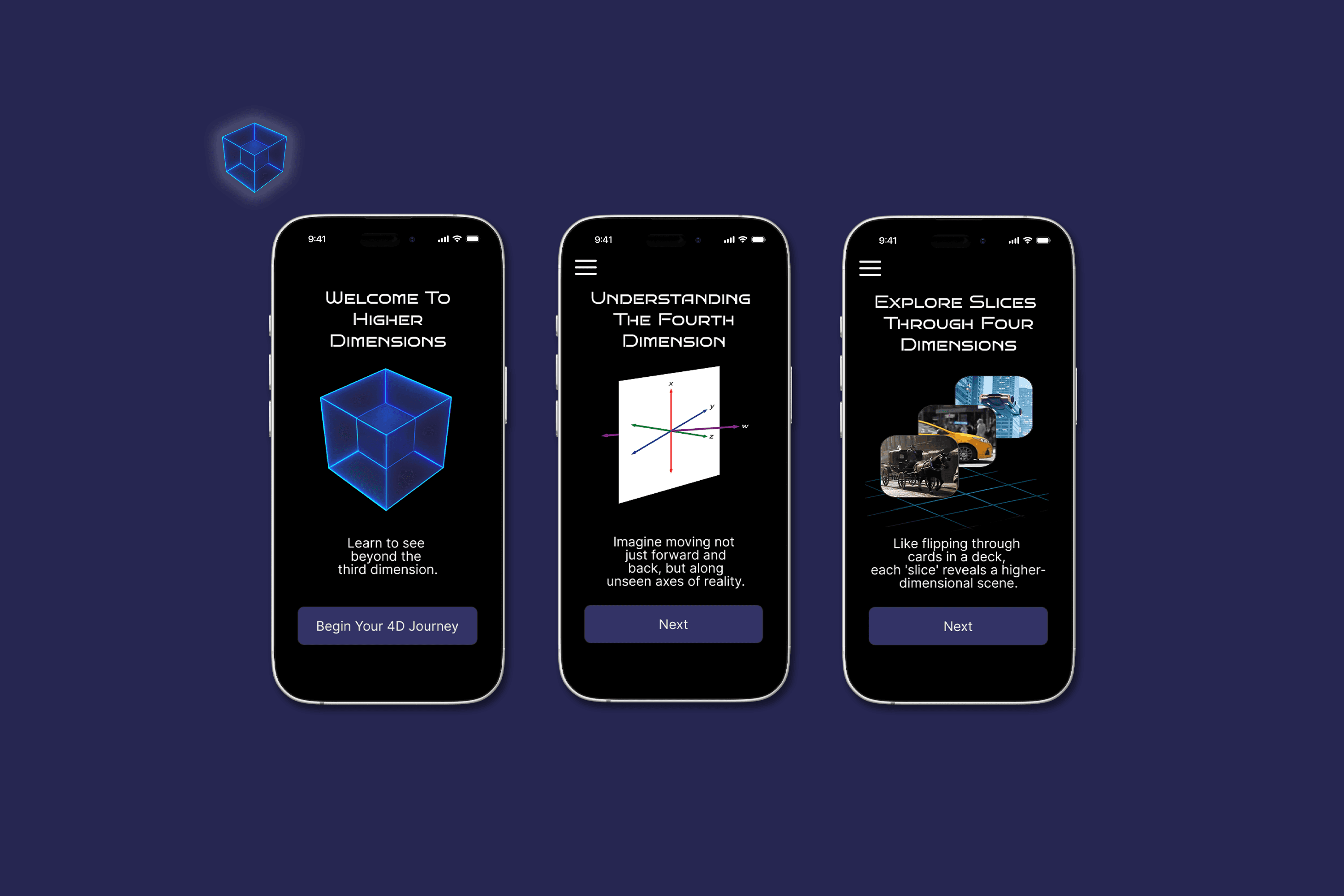
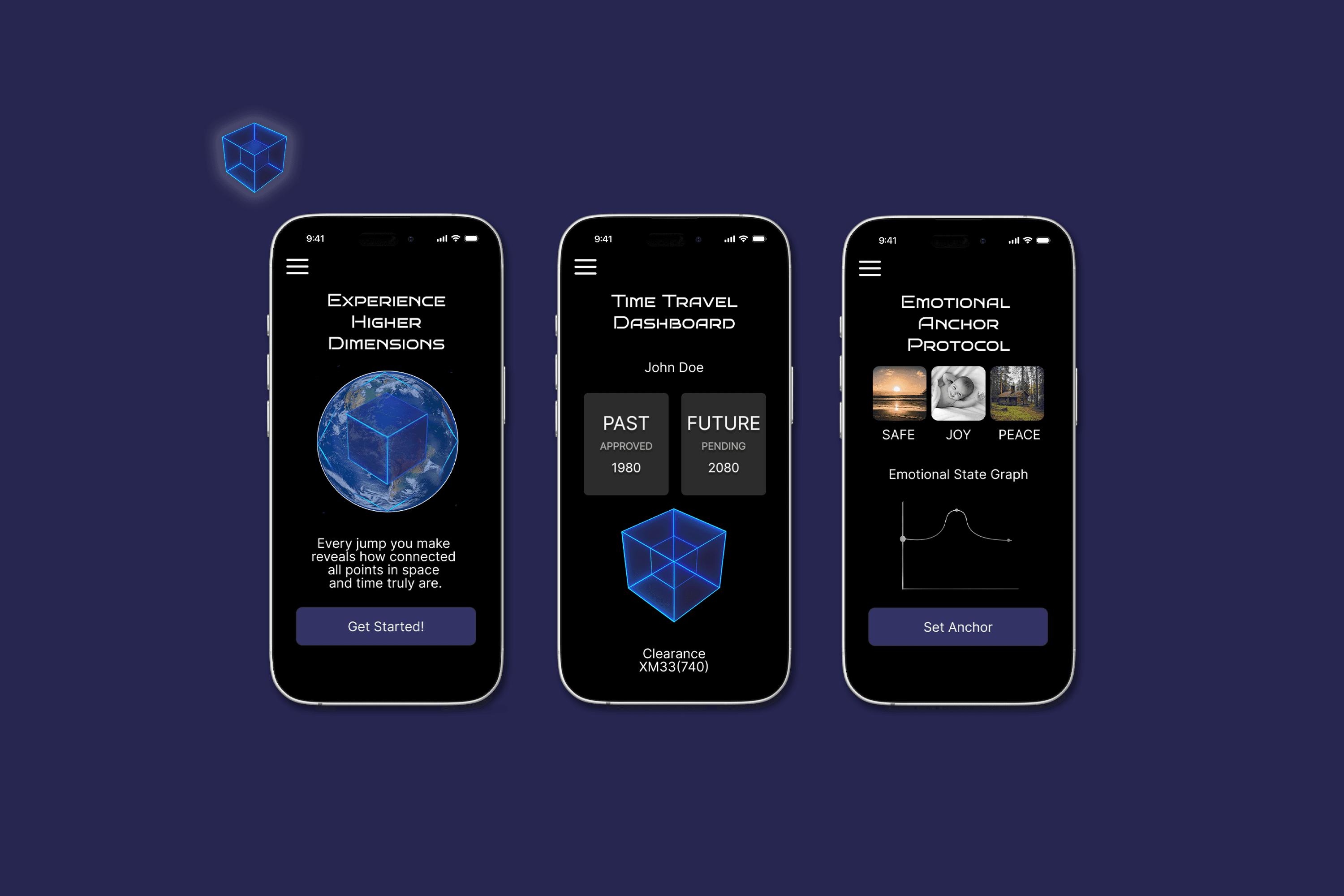
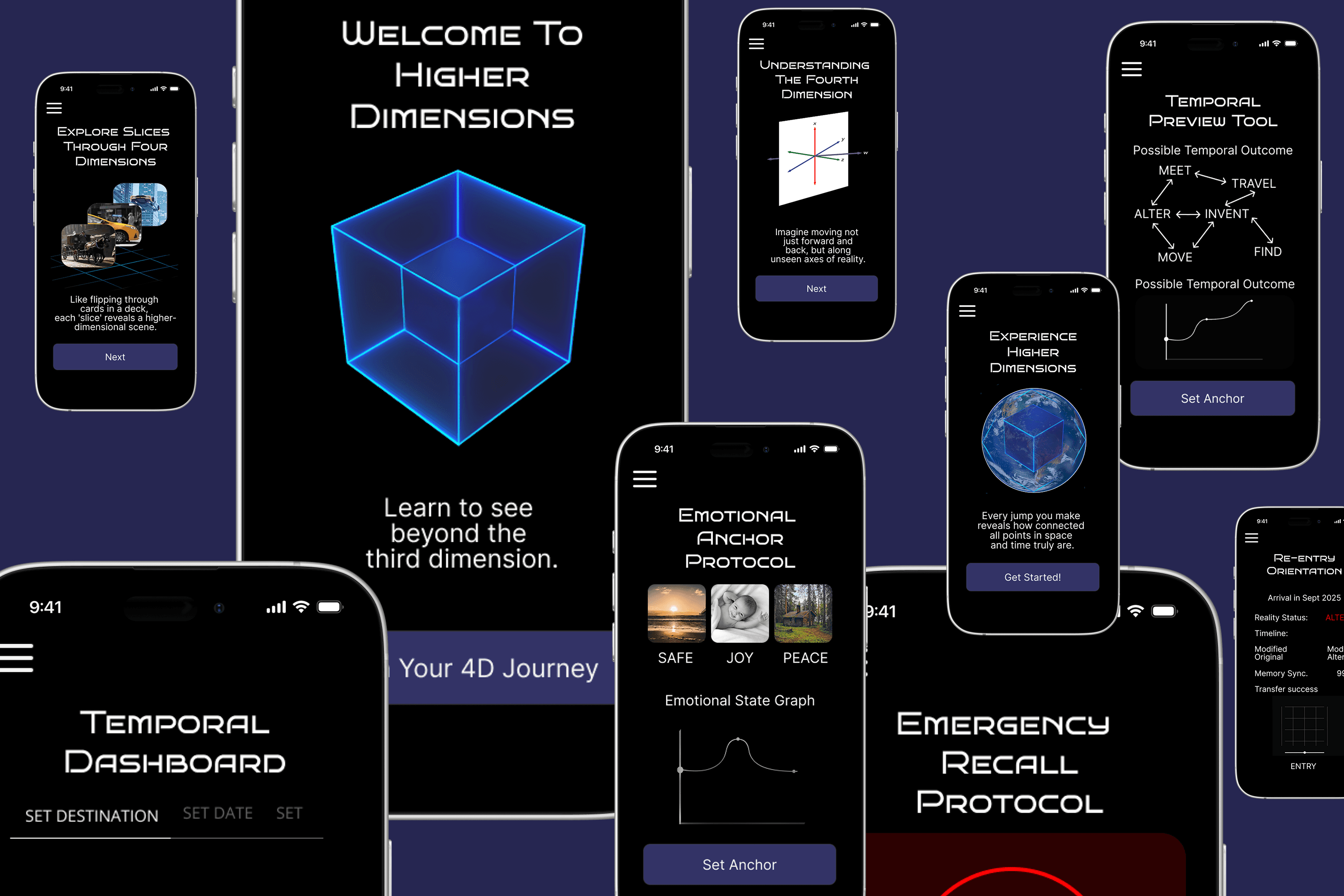
Principal Interaction Architect Explored interaction models, information architecture, and visual metaphors for navigating time as a multi-dimensional system rather than a linear sequence. PROBLEM FRAMING — Most digital interfaces assume time is linear: past → present → future. However, many real-world systems—such as AI decision-making, trauma processing, scenario planning, and complex simulations—operate across branching timelines, parallel states, and delayed consequences. This project takes an outside-in perspective to ask: What would a user interface look like if time itself were the primary navigable medium? CONCEPT OVERVIEW — Time Travel UX is a speculative interface concept for navigating non-linear time. Rather than representing time as a single axis, the system visualizes it as a spatial environment shaped by: • Decision trees and branching outcomes • Emotional and contextual anchors • Geometric flows representing probability, causality, and consequence The interface imagines a cross-dimensional assistant that helps users explore alternate paths, understand downstream effects, and re-orient within complex temporal systems. DESIGN APPROACH — The project draws inspiration from: • Emergency and medical UX decision tools, where users must act under uncertainty • Cognitive mapping and spatial memory research • Immersive and interaction patterns • Scenario planning and multi-path reasoning frameworks Rather than emphasizing narrative realism, the design prioritizes comprehension, orientation, and ethical awareness when navigating high-stakes, multi-outcome environments. CORE DESIGN PRINCIPLES — • Non-Linear Navigation — Time represented as a navigable space rather than a timeline • Perspective Shifting — Zooming between macro timelines and micro decision points • Cognitive Load Management — Abstract geometry used to reduce complexity while preserving meaning • Ethical Awareness — Visual cues highlight irreversible decisions and unintended consequences • Orientation & Grounding — Persistent reference points to prevent user disorientation Try the clickable Prototype Mockup below: