Industry
AI Systems, Immersive Computing, Education Technology
Client
Bertelsmann
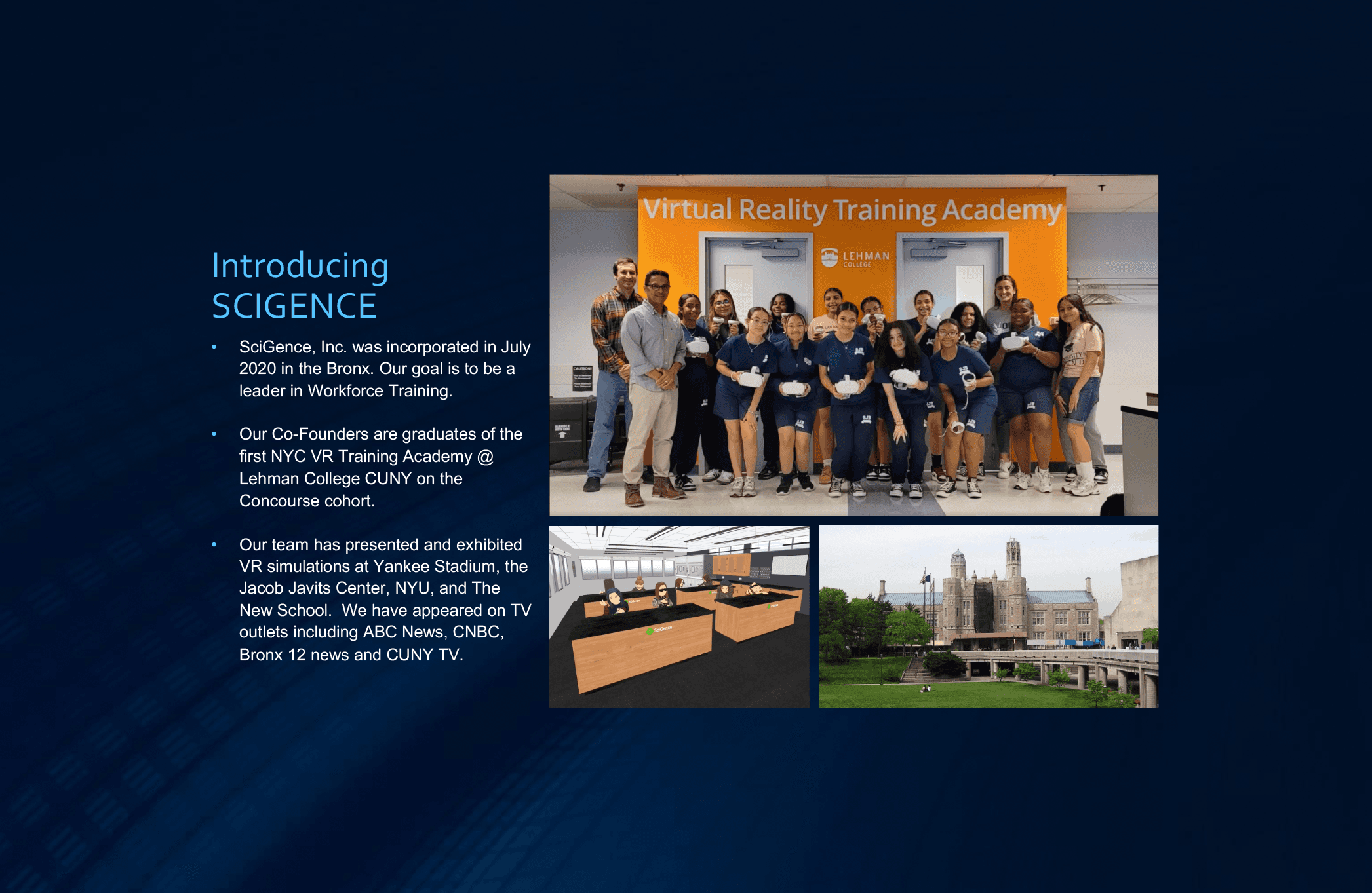
SciGence – AI-Powered VR STEM Learning

My Role
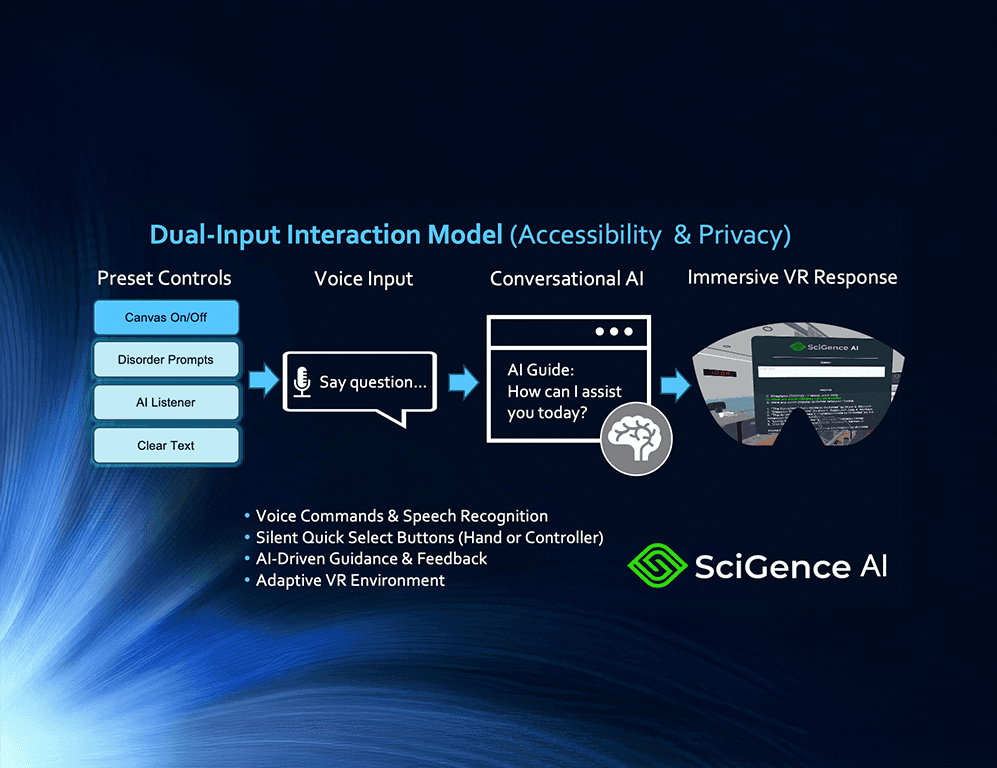
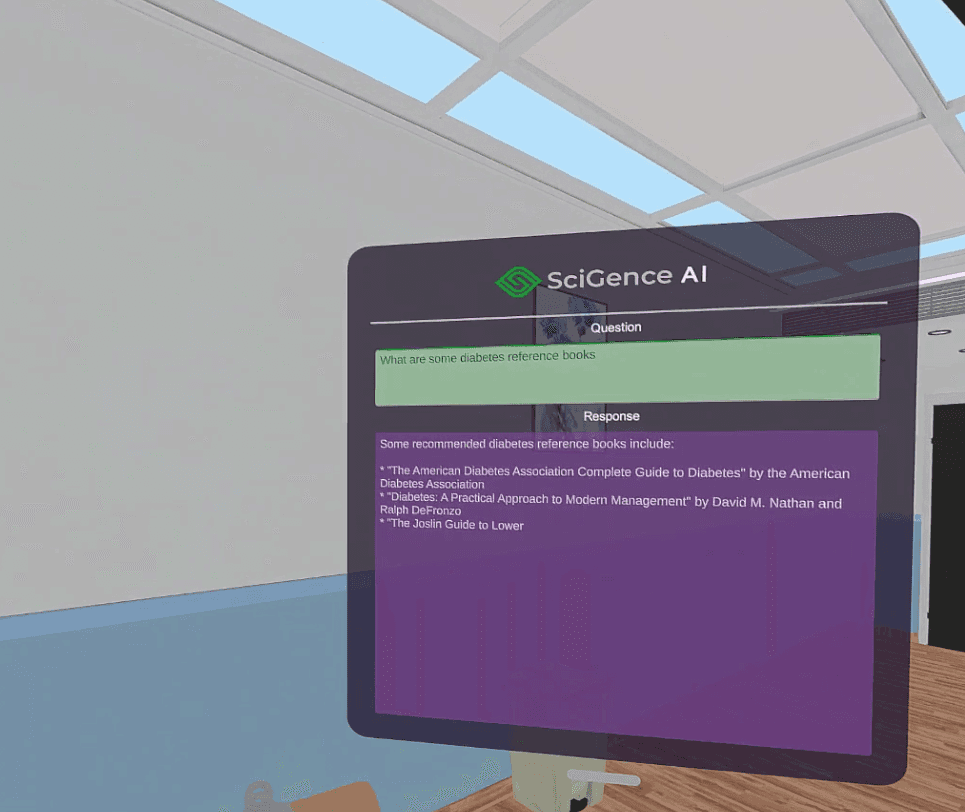
Lead UX & Immersive Systems Designer CORE CONTRIBUTIONS — • Designed a dual-input interaction model enabling learners to engage via voice or silent, preset controls—supporting accessibility, privacy, and varied learning contexts. • Defined and authored the core multimodal interaction language (voice, gesture, spatial UI), establishing consistent behavioral patterns across AI-driven immersive learning modules under strict usability, accessibility, and latency constraints. • Led end-to-end UX design for an AI-powered VR learning system that responds to learner input through a conversational AI interface embedded within immersive scenarios. • The platform integrates conversational AI with real-time game engine constraints to deliver guided, personalized STEM instruction in 3D environments. • Prototyped and tested immersive scenarios combining voice interaction, natural movement, and domain reasoning to support transfer from simulated environments to real-world problem solving. • Aligned AI, ethics, and product teams around shared design constraints, including explainability, learner trust, and pedagogical integrity. CONSTRAINTS & TRADEOFFS — • Designed for variable hardware performance and inconsistent network conditions. • Balanced AI-driven adaptivity with predictable learner mental models. • Avoided opaque personalization to preserve trust and instructional clarity. • Limited interaction complexity to reduce cognitive overload in immersive 3D space. Special thanks to SciGence CEO Vicente Navarro and advisor Patrick Cross.